
King of Fish
a discussion of the thousand-year run of salmon

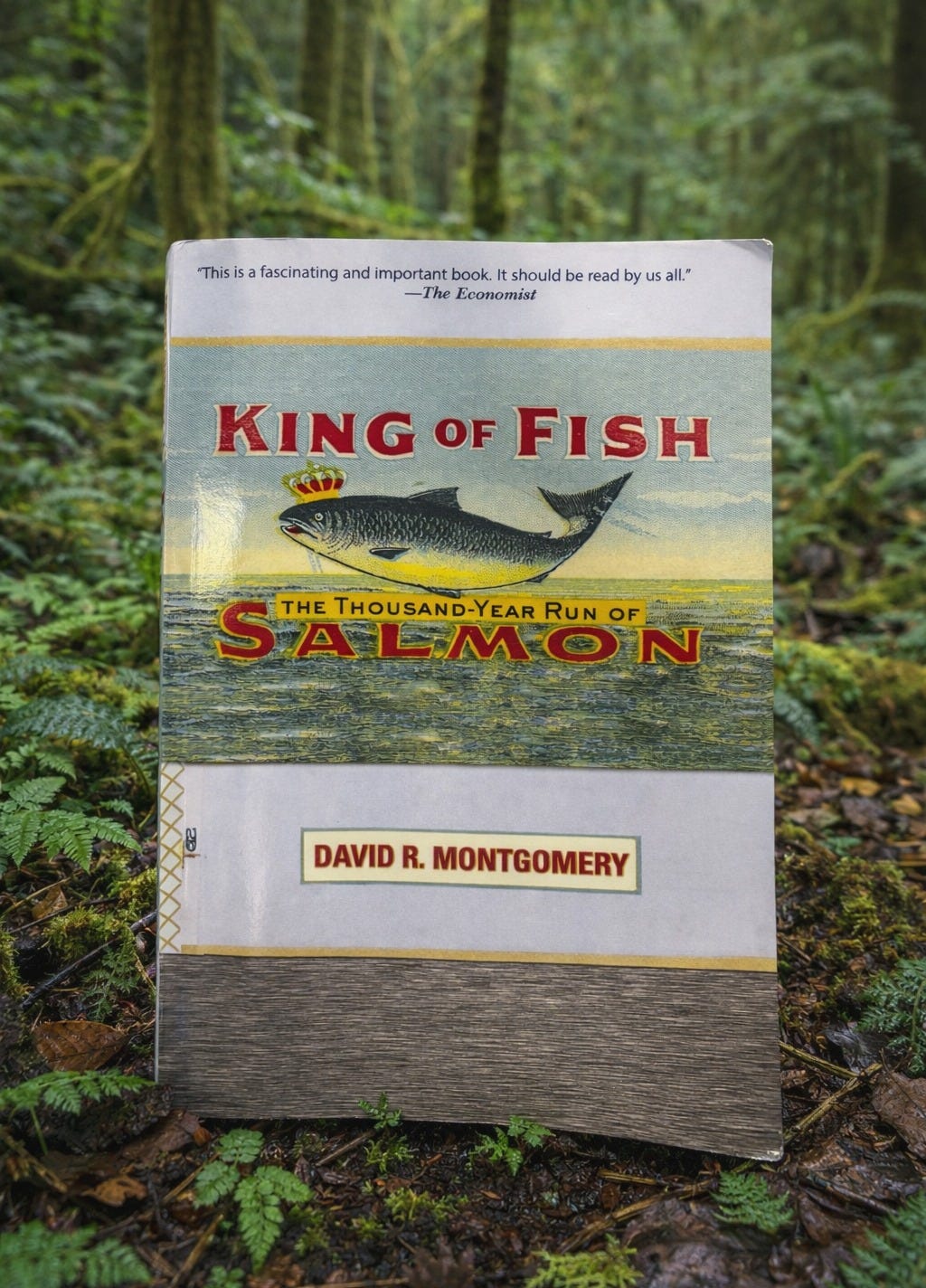
When The Economist says, “This is a fascinating and important book. It should be read by us all,” you read the book.
I’ll add a few more adverbs and say that King of Fish by David R. Montgomery is an absolutely fascinating and desperately important book.
However, keep in mind that I’m biased. I feel a divine connection to salmon and enjoy reading nonfiction, which makes me this book’s ideal reader. That being said, I think The Economist is right, this book should be read by all. And in my mind, it can be read and enjoyed by all.
My relationship with salmon began when I started spending summers in Bristol Bay, Alaska. Prior to that, salmon was a delicious source of protein that I preferred grilled. Now, salmon are deeply connected to who I am. You may roll your eyes, but this connection feels as true to me as my name itself or the dwindling blond hair on my head.
Therefore, when I saw King of Fish sitting on a friend’s coffee table, I knew I had to read it. By the fifth page, I was convinced that I liked it.
“Salmon are a symbol of our time, icons of the Northwest, and an indicator of environmental quality—a river full of salmon is a healthy river.”
Every author needs to help the reader understand the stakes. With this single sentence, Montgomery does just that. In the places they exist, salmon are the Jenga block holding up the entire ecosystem. People rely on them. Culture is shaped by them. And every single living creature reacts to them. Remove salmon, and the entire system crumbles.
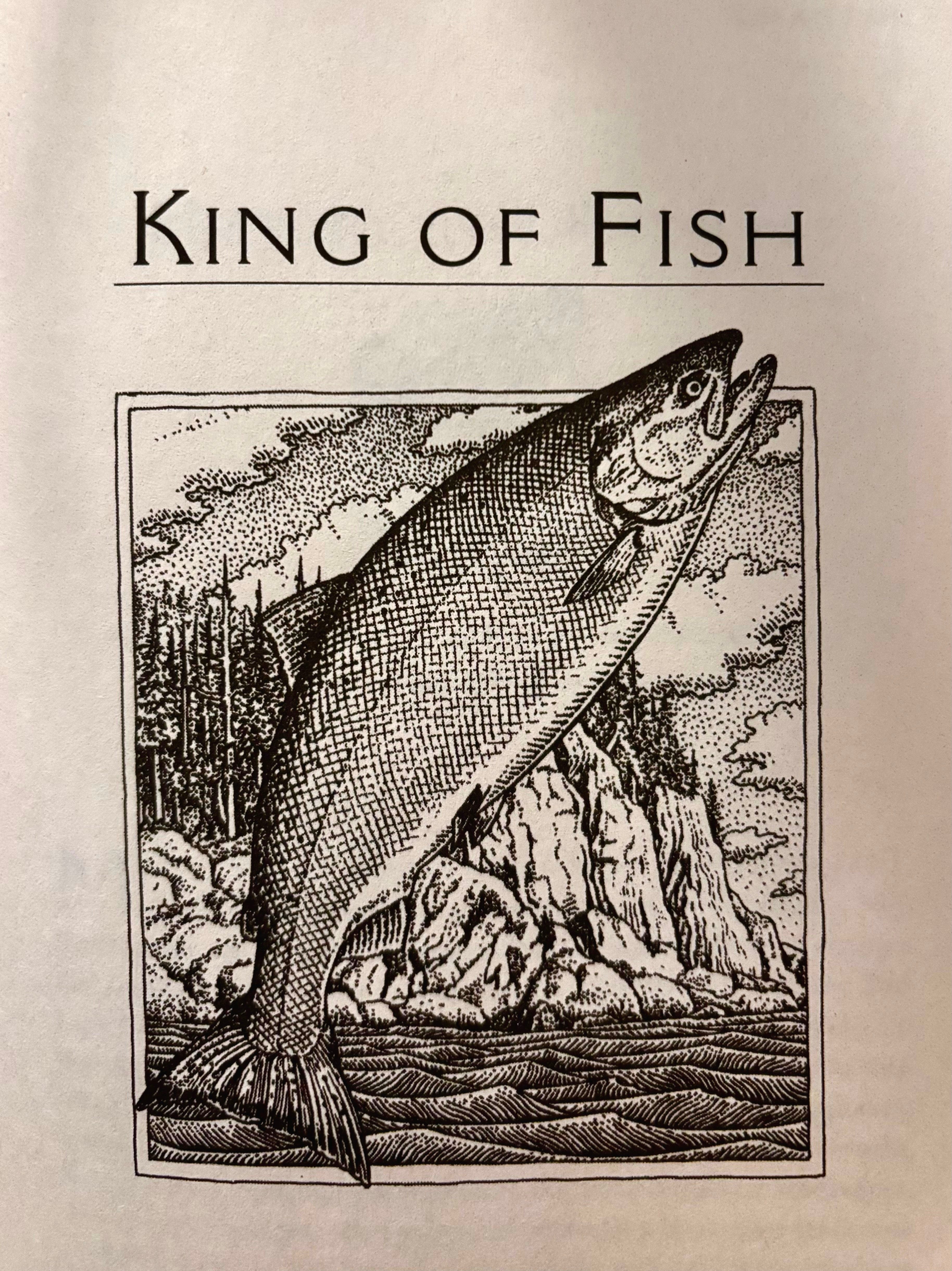
There are a lot of reasons why this book is great: it is well written, it is relevant, it leaves no stone unturned, the argument is supported by massive amounts of data, Ray Troll did the artwork… the list is endless. The “what I don’t like” column is pretty short, but I’ll say that some will find it a bit dense. If that’s you, I’m pretty sure there is an audiobook version.
King of Fish argues that salmon have a powerful history and that their ability to survive is now uniquely tied to our choices. Before the era of modern man, salmon survived through geological changes, ice ages, and massive climate catastrophes. Since our arrival, the population of salmon has been decimated by the 4 H’s (habitat, hatcheries, hydropower, and harvest).
Montgomery explains that man has pushed wild salmon to near extinction in Europe and the Northeast of North America. If nothing is done, that same fate will be brought upon the Pacific Northwest. King of Fish presents us with a set of actions that can be taken to prevent the extinction of Pacific Northwest salmon. I hope we take them.
Why should you read it, and why should you care about salmon?
Remember learning about the buffalo? Close your eyes and imagine the Great Plains shaking under your feet as thousands of these animals charge across the continent. How does it make you feel that this no longer happens, and probably never will again?
Salmon are headed for the same fate, complete eradication from their natural environment. Before the 4 H’s began their destruction, thousands, sometimes millions of salmon returned to their natal rivers to spawn each year. Nowadays, most of the fish are genetically repugnant and stuck in farms or spat out by hatcheries.
If avoiding the fate of the buffalo isn’t enough, there is a patriotic reason as well—salmon are core to the history of the US of A. If you read King of Fish, you’ll learn that during the Revolutionary War, the Brits had established a blockade at sea to prevent any incoming ships. Strapped for food, the colonists and Washington’s army relied on the native Atlantic salmon to fill their bellies.
Unlike the buffalo, we have a chance to prevent the extinction of salmon. Reading King of Fish might be the first step in the right direction. If you do read it, I’d love to hear what you think.
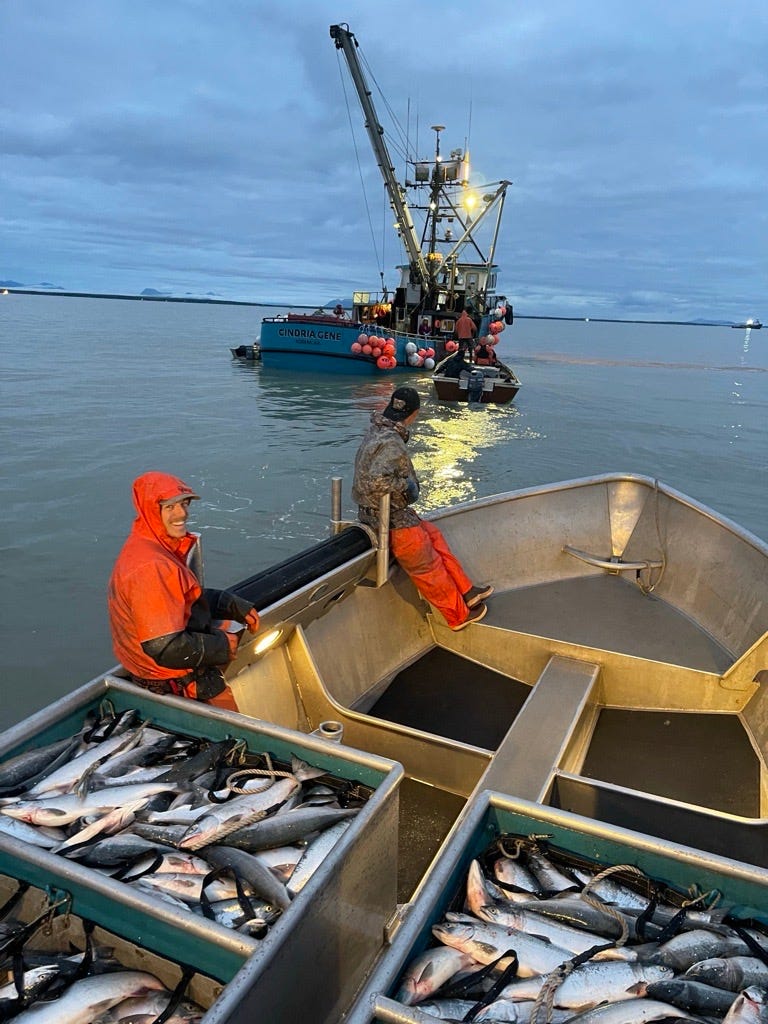
Terrific piece Cliff and I love the Bristol Bay fishing photo!
I just might have to find a book to read. Any suggestions??? Good article. I love listening. 💙